
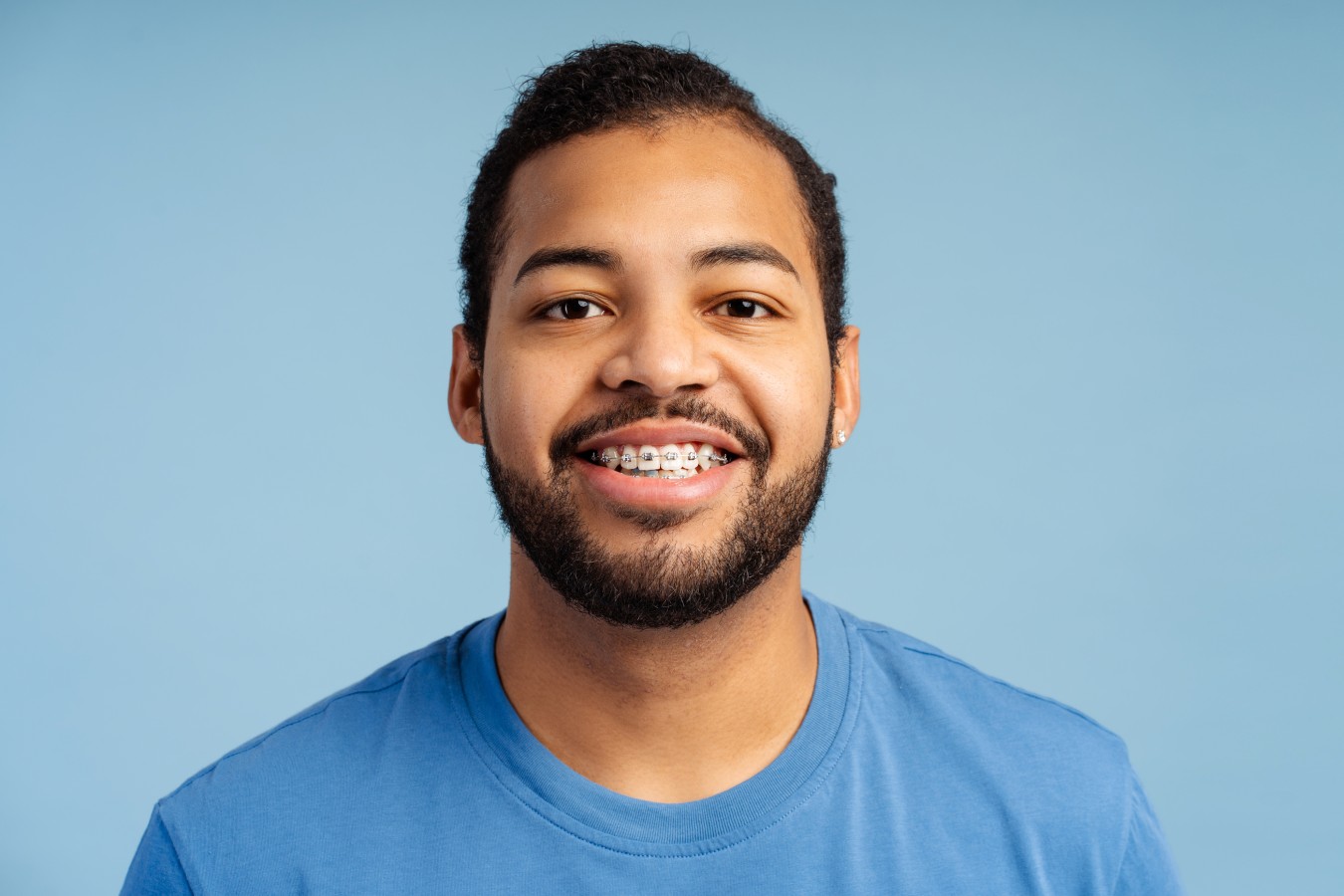
Getting braces feels a lot less mysterious once you know what’s coming. Most families walk through our doors with the same questions about timing, comfort, cost, and what daily life looks like with brackets on. Below, our orthodontists at Hometown Orthodontics explain how braces work, what happens at each visit, and which option fits your bite best.
What Are Braces and What Do They Actually Do?
Braces are fixed appliances that use brackets, archwires, and elastics to guide teeth into better alignment, correcting crowding, gaps, crossbite, overbite, underbite, and open bite. The wire applies steady, gentle pressure, and the bone around each tooth root remodels over months to hold teeth in their new positions.
Metal, clear ceramic, and lingual braces all move teeth by that same mechanism. The difference is how visible the hardware is and where it sits on the tooth, not how the biology works.
Straight teeth get the attention, but alignment does more than change how a smile photographs. Teeth that fit together properly share chewing forces evenly instead of grinding down a few spots. A bite left uncorrected for years can wear enamel unevenly, chip edges, and make chewing feel like more work than it should. Brushing and flossing reach more surfaces, too, which protects gum tissue and enamel over the long haul.
That’s why our orthodontists at Hometown Orthodontics look at bite function and jaw development during every exam, not just the front six teeth you see in the mirror.
How Braces Treatment Works, Step by Step
Braces treatment follows six predictable stages: consultation, planning, bonding, adjustments, removal, and retention. A board-certified orthodontist reviews your records and maps out every one of those stages before a single bracket is bonded, so you know the plan going in. Bonding day usually takes one to two hours, adjustment visits happen every four to ten weeks, and most cases finish in 12 to 24 months. Retention starts the same day your brackets come off and continues long-term.
- Free consultation. We complete a clinical exam, take digital X-rays, and use digital intraoral scanning instead of the old “goop and gag” impressions. The scan takes minutes and shows your bite in 3D.
- Personalized plan. Your orthodontist maps out how each tooth needs to move, estimates treatment length, and reviews appliance choices with you before anything gets bonded.
- Bonding day. Brackets are cleaned, positioned, and bonded to each tooth, then the first archwire is placed. Nothing sharp, nothing loud. Plan on one to two hours.
- Adjustment visits. Every four to ten weeks, we change wires, tighten or replace elastics, and check progress. These visits are short.
- Debonding. Brackets come off, teeth get polished, and we take a retainer scan during that same visit so nothing shifts while your retainer is made.
- Retention. You’ll wear a retainer as directed, and we’ll keep monitoring your bite. Teeth remember where they came from, so retention is not optional.
Between stages, you’ll have direct access to our awesome staff for anything that comes up: a poking wire, a loose bracket, or a question about a food you’re not sure about. Give us a call or shoot us an e-mail, and we’ll tell you whether it can wait until your next visit or needs a quick fix sooner.
Benefits of Choosing Braces
Braces handle the widest range of orthodontic problems, and they do it without depending on you to remember anything. Here’s what families appreciate most:
- Power for complex cases. Significant rotations, severe crowding, and bite corrections that aligners alone may not fully resolve respond well to fixed brackets and wires.
- No compliance risk. Braces stay on, so treatment keeps progressing even on busy school nights and vacation weeks.
- Easier hygiene long-term. Once teeth are straight, brushing and flossing reach places crowded teeth hide, which lowers decay and gum disease risk.
- Better bite mechanics. An improved bite reduces uneven wear, chipping, and jaw strain.
- Personality included. Kids and teens pick new elastic colors at every visit. Game day, holidays, school colors, whatever they want.
- Discreet choices. Clear ceramic brackets and lingual braces placed behind the teeth give adults quieter options.
Braces vs. Invisalign vs. Clear and Lingual Braces
There’s no single “best” appliance. The right choice depends on your bite, your age, your daily routine, and how visible you want treatment to be.
| Option | Visibility | Removable | Best suited for | Daily demands |
|---|---|---|---|---|
| Metal braces | Most visible | No | The widest range of cases, including complex bite corrections | Careful brushing, food restrictions |
| Clear ceramic braces | Tooth-colored, low profile | No | Adults and older teens who want a subtler look | Same as metal, plus avoiding staining foods; brackets are slightly more fragile |
| Lingual braces | Hidden behind the teeth | No | Adults with visibility concerns and suitable bites | Tongue adjustment period, detailed cleaning |
| Invisalign | Nearly invisible clear trays | Yes | Mild to moderate crowding, spacing, and select bite issues | 20 to 22 hours of wear each day, removing trays to eat |
Invisalign trays are completely clear, so they don’t detract from your face or smile, and you can take them out to brush, floss, and eat normally. Fixed braces work differently: they stay put and keep moving teeth around the clock with nothing for you to track. Both approaches move teeth predictably when they’re matched to the right bite and worn as directed.
Some families prefer clear ceramic brackets because treatment stays quiet in photos and at work. Others like the flexibility of removable trays, and plenty of kids and teens genuinely enjoy picking colors with standard metal. During your free consultation, we’ll show you which options your bite actually qualifies for instead of guessing, and we’ll walk through the trade-offs of each in plain language so the decision feels like yours.
What Affects the Cost of Braces
Braces cost is driven by three things: how complex your case is, how long treatment takes, and which appliance you choose. Clear ceramic and lingual braces typically run higher than standard metal. Dental insurance often includes an orthodontic lifetime maximum, and FSA or HSA dollars plus monthly payment plans can spread the balance over time.
Prices vary because mouths vary. A quote only means something once someone has actually looked at your teeth, your X-rays, and your scan, which is why we go over numbers with you in person rather than over the phone.
| Factor | How it affects your total |
|---|---|
| Case complexity | Bite corrections and severe crowding take more time and more visits |
| Treatment length | Longer treatment means more adjustment visits |
| Appliance type | Metal is the baseline; ceramic and lingual usually cost more |
| Insurance benefits | Many plans include orthodontic coverage for children, though amounts vary by plan |
| Retainers and records | Sometimes quoted separately from active treatment |
| Replacements | Lost or broken retainers and appliances may carry a fee |
Two things worth doing before you commit anywhere: call your insurance carrier to confirm your orthodontic lifetime maximum, and ask for a written estimate that spells out records, active treatment, and retention. We’re happy to walk through both with you.
Who Is a Good Candidate for Braces?
Most people with crowding, spacing, or bite misalignment and healthy gums are candidates. Age isn’t the deciding factor. Adults make up a growing share of our orthodontic family, and treatment works at any age as long as teeth and gum tissue are healthy.
- Children: The American Association of Orthodontists recommends a first orthodontic evaluation by age 7. At that point your child has a mix of baby and adult teeth, jaw growth patterns are becoming clear, and subtle concerns can be caught early.
- Teens: Most permanent teeth are in place, which makes this a common window for full treatment.
- Adults: Braces or aligners correct shifting, crowding, and long-standing bite issues. Gum health gets checked carefully first.
- Anyone with active cavities or gum disease: Those get treated by your general dentist before brackets are bonded.
- Every family starting treatment: Results depend on brushing well, wearing elastics as directed, and respecting food restrictions.
A free consultation with digital X-rays and a digital scan shows us what’s happening under the surface, rules out anything that needs attention first, and confirms the right approach for you.
Why Families Choose Hometown Orthodontics for Braces
Dr. Rape is a board-certified orthodontist and Diplomate of the American Board of Orthodontics with more than 35 years in private practice. He has also served as a Clinical Professor at the UAB School of Dentistry, and he was voted one of America’s Top Orthodontists by the Consumers’ Research Council of America.
Dr. Jared Teeples, DDS, MS, earned his DDS from the University of Utah School of Dentistry with High Honors, completed his orthodontic residency and MS at the University of Alabama at Birmingham where he served as Chief Orthodontic Resident, and teaches part-time as a clinical professor in the UAB Orthodontic Department. He’s also a member of Omicron Kappa Upsilon and an Invisalign provider.
Several members of our awesome staff have been part of the Hometown Orthodontics family for decades. That kind of tenure means the person who checks your elastics this year is likely the same person who greeted you on bonding day.
Credentials matter. So does the feeling you get when you walk through our doors. Creating beautiful smiles and striving to make a difference in the lives of others on a daily basis is the essence of our practice, and our prayer is that you leave feeling like family.
From your first exam through your last retainer check, you’re working with the same familiar faces who know your name and your case. We’re your friendly neighborhood orthodontic practice, and our focus stays on confident, healthy smiles for children, teens, and adults alike. Welcome to the hometown family.
Frequently Asked Questions About Braces
How long do braces take?
Most cases run 12 to 24 months, though simple corrections can finish sooner and complex bite work can take longer. Your orthodontist gives you an estimated range at your consultation based on how far your teeth need to move. Keeping your visits and wearing elastics as directed keeps you on schedule.
Do braces hurt?
Braces don’t hurt when they’re placed. Expect mild soreness for two to four days after bonding and again for a day or so after some adjustments, since teeth are being asked to move. Soft foods, cold water, and over-the-counter pain relievers handle it well. Any wire that irritates your cheek can be fixed quickly, so call us instead of waiting it out.
What foods should I avoid with braces?
Skip hard, sticky, and chewy items that can break brackets or bend wires: ice, hard candy, caramel, taffy, popcorn kernels, nuts, and whole raw apples or carrots. Cut firm foods into small pieces instead of biting straight in. Sugary drinks deserve moderation too, since sugar sitting around brackets raises decay risk.
How often are adjustment visits?
Usually every four to ten weeks, depending on where you are in treatment. These visits are short, and they’re where the actual progress gets managed: new wires, elastic changes, and progress checks. Missing them stretches out your total treatment time.
Do I need a retainer after braces?
Yes. Teeth naturally drift back toward their old positions, and retention is what prevents that. We scan for your retainer the same day your brackets come off, then review a wear schedule that starts full-time and tapers to nights. Keep wearing it long-term to protect the result.
Can adults get braces?
Absolutely. Bone remodels throughout life, so tooth movement works at any age with healthy teeth and gums. Many adults choose clear ceramic braces, lingual braces, or Invisalign for a more discreet look while correcting crowding, spacing, or bite problems they’ve lived with for years.