
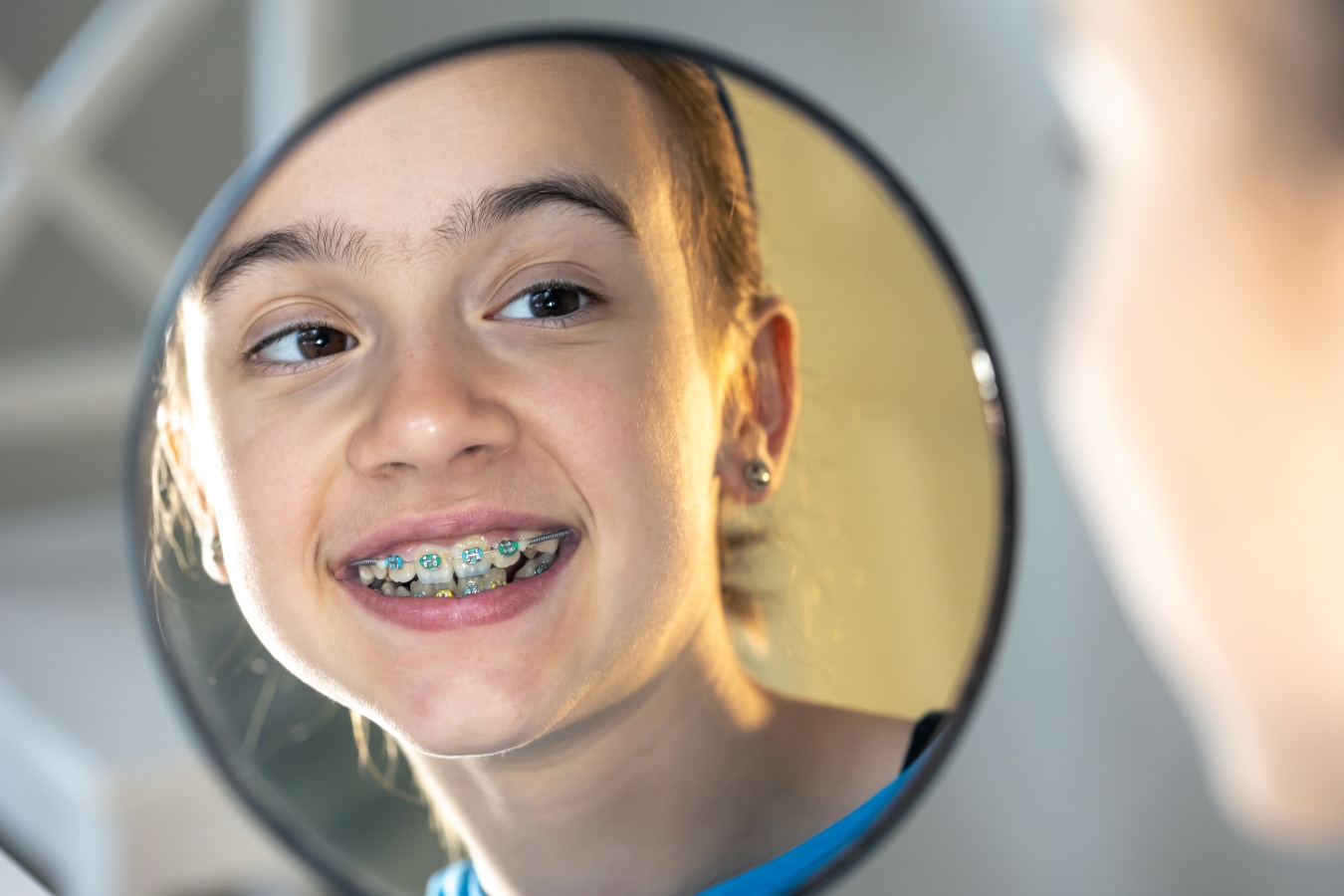
Modern braces use smaller, lower-profile brackets and heat-activated wires that move teeth with lighter, steadier force than older systems did. What’s new in orthodontic treatment this year comes down to digital records, self-ligating brackets, gentler wires, and 3D-printed retainers that make the whole process more predictable and more comfortable.
What Are Modern Braces?
Modern braces are fixed appliances that bond a small bracket to each tooth and connect them with a thin archwire. The wire applies light, continuous force, guiding teeth into better positions over months while your orthodontist fine-tunes the bite at each visit.
The hardware itself has changed a lot. Brackets today are noticeably smaller and sit lower against the tooth, so they feel less bulky against your lips and cheeks. Many are self-ligating, meaning a tiny built-in door holds the wire in place instead of an elastic tie.
You also have choices in how visible your braces are:
- Metal braces: stainless steel brackets, the most common and most versatile option
- Clear ceramic braces: tooth-colored brackets that blend with your enamel and are much less noticeable than metal braces
- Lingual braces: the same components as conventional braces, but fixed to the back, or lingual, side of your teeth
Our orthodontists at Hometown Orthodontics will walk you through which bracket style suits your bite, your age, and the way you go about your day, since the right hardware is a practical decision as much as an aesthetic one.
Wires have improved just as much. Heat-activated nickel-titanium archwires respond to body temperature and deliver gentler, more consistent pressure than the older stainless steel wires many parents remember from their own treatment.
And for anyone who wants metal braces with personality, colored elastics are still part of the fun. Kids and teens in our chairs pick fresh colors at every adjustment, from school spirit combos to holiday themes.
How Modern Braces Treatment Works, Step by Step
Braces treatment follows five stages. First comes a digital exam and records visit, then a planning stage where tooth movement is mapped out, then the bonding visit where brackets go on. After that come periodic adjustment visits every four to ten weeks, and finally debonding with retainers. Most active treatment runs 12 to 24 months depending on complexity.
Here’s what each step looks like in practice.
- Exam and digital records. We take digital X-rays and a digital intraoral scan of your teeth. Digital radiography offers reduced radiation , clearer images for diagnosis, and less wait time. Intraoral scanning also improves your experience by eliminating the need for “goop and gag” impressions.
- Your personalized plan. Using those digital records, our orthodontists map out how each tooth needs to move, which teeth need rotation, and how the bite should fit together at the finish. You’ll see the plan explained before anything gets bonded.
- Bonding visit. Brackets are cleaned, positioned, and bonded one at a time, then the first archwire is placed. This visit typically takes 45 to 90 minutes, and no anesthesia is needed. You’ll leave the same day wearing your braces.
- Adjustment visits. Every four to ten weeks, we change or tighten the wire and check progress. Self-ligating systems sometimes allow longer stretches between visits, which helps families juggling school and work schedules.
- Debonding and retainers. Brackets come off, teeth are polished, and retainers are made. Many retainers today are 3D-printed from your digital scan, which improves fit and comfort.
Complexity drives timing. A mild crowding case finishes faster than a case involving jaw growth, impacted teeth, or extractions, and our orthodontists at Hometown Orthodontics will give you a realistic range at your FREE consultation rather than a vague guess.
Benefits of Modern Braces Technology This Year
Smaller hardware, smarter wires, and digital records all add up to a more comfortable experience than braces from a generation ago. The improvements are practical, not just cosmetic.
- Less irritation, easier brushing. Lower-profile brackets create fewer rough edges against soft tissue and leave more tooth surface exposed for your toothbrush.
- No messy impressions. Digital scanning replaces trays of impression material, which means no gagging and a better-fitting appliance or retainer.
- Gentler adjustments. Lighter-force wires and self-ligating brackets can reduce the soreness some people feel in the days after a wire change.
- Safer, faster imaging. Digital X-rays use significantly less radiation than film and display on screen instantly, so we can review findings with you right there in the chair.
- Discreet choices. Clear ceramic and lingual braces make treatment far less visible, which matters to a lot of teens and working adults. Plenty of folks who choose clear braces feel more confident during treatment.
- Fewer surprises. Planning movement digitally before bonding tends to shorten chair time and cut down on emergency visits for broken or misplaced hardware.
How Do Smaller Brackets Improve Day-to-Day Comfort?
Lower-profile brackets sit closer to the tooth surface, so there is less hardware pressing against the inside of your lips and cheeks during that first week of treatment. Fewer sore spots means less need for wax and an easier time getting back to normal eating. The rounded edges on today’s brackets also snag food less often, and because more of each tooth stays exposed, brushing and flossing feel closer to your usual routine rather than a nightly chore.
Why Does Digital Scanning Matter for Retainers?
A digital scan can be stored, reused, and re-printed without bringing you back in for another set of impressions. If a retainer is ever lost, cracked, or left behind in a school lunch bag, our orthodontists can often print a replacement from the file already on record. Scans also capture fine detail along the gumline, which usually translates into a retainer that seats more comfortably and holds your finished result more reliably over the years.
Braces are about much more than straight teeth. Orthodontic treatment helps improve bite function, protects long-term oral health, guides proper jaw development, and most importantly, it builds real confidence.
Modern Braces vs. Clear Aligners vs. Lingual Braces
All three approaches straighten teeth well. They differ in visibility, in how much of the work you control, and in how complex a case they can handle.
| Feature | Metal Braces | Clear Ceramic Braces | Lingual Braces | Clear Aligners |
|---|---|---|---|---|
| Visibility | Visible, customizable with color elastics | Blends with tooth color | Hidden behind teeth | Nearly invisible clear trays |
| Removable | No | No | No | Yes |
| Treatment scope | Widest, including complex bites and rotations | Most cases, slightly more fragile brackets | Most cases, with a longer adaptation period | Mild to moderate cases, some complex with attachments |
| Hygiene | Brush and floss around brackets | Same as metal, avoid staining foods | Harder to reach at first | Easiest, remove to brush |
| Compliance needed | Low, works around the clock | Low | Low | High, 20 to 22 hours of daily wear |
| Adjustment interval | Every 4 to 10 weeks | Every 4 to 10 weeks | Every 4 to 8 weeks | Tray changes at home, checks every 6 to 10 weeks |
Metal braces remain the workhorse. When a case involves significant rotations, deep bites, or teeth that need vertical repositioning, fixed brackets give our orthodontists the most control.
Clear ceramic braces work the same way mechanically with tooth-colored brackets. They’re an aesthetic alternative for anyone who wants options other than metal braces.
Lingual braces hide completely from the front. Your tongue needs a couple of weeks to adjust, and speech feels different at first.
Clear aligners are completely clear, so they don’t detract from your face or smile. They only work when you wear them, which makes them best for disciplined teens and adults.
The right choice depends on your bite, your age, and your daily routine, not appearance alone.
What Affects the Cost of Modern Braces?
The cost of modern braces depends on three things: how complex your case is, which bracket material or appliance you choose, and how many months of active treatment you need. Metal braces usually sit at the lower end, ceramic and lingual braces higher, and insurance benefits, HSA or FSA dollars, and monthly payment plans all shape your final out-of-pocket total.
There is no one-size-fits-all price for braces. Cost depends on how complex your case is, which appliance you choose, and how long treatment takes. Metal brackets are typically the most economical option, while ceramic and lingual braces cost more because of the materials and the extra chair time involved.
| Cost Factor | How It Affects Your Fee |
|---|---|
| Case complexity | Crowded, rotated, or misaligned bites need more visits and more precise work |
| Bracket material | Metal is generally most economical; ceramic and lingual sit higher |
| Treatment length | Longer active treatment means more adjustment visits |
| Pre-treatment work | Extractions, expanders, or space maintainers add to the total |
| Retainers | Ask whether your first set of retainers is bundled into the fee |
| Payment structure | Insurance orthodontic benefits, HSA or FSA dollars, and monthly payment plans all change what you pay out of pocket |
Many dental insurance plans include orthodontic benefits for children, although the amount of coverage varies by plan. HSA and FSA funds can usually be applied toward treatment as well.
One piece of advice worth following anywhere you go: ask for a written treatment fee that spells out exactly what’s included and what isn’t. Records, adjustment visits, repairs, and retainers should all be accounted for before you commit.
Who Is a Good Candidate for Modern Braces Today?
Braces work for children, teens, and adults. There’s no upper age limit, and healthy teeth can be moved at 15 or 55.
Good candidates typically have one or more of these concerns:
- Crowding where teeth overlap and trap plaque
- Spacing or gaps between teeth
- Overbite, where upper teeth extend too far over the lower teeth
- Underbite, where the lower jaw sits forward past the upper jaw
- Crossbite, where upper and lower teeth don’t line up properly
- Deep bite or rotated individual teeth
Adults who wore braces as kids and stopped wearing their retainers make up a big share of our adult cases. Relapse is common, and it’s very treatable.
Two things need to be squared away before bonding: healthy gums, and any cavities filled. Brackets shouldn’t go on top of active decay.
For kids, the American Association of Orthodontists recommends a first orthodontic evaluation by age 7. At this age your child has a mix of baby and adult teeth, jaw growth patterns are becoming clear, and subtle concerns can be caught early. Families who come through our doors at Hometown Orthodontics often bring a younger sibling along for that early check while an older child is already in treatment, which keeps everything on one calendar.
Who Provides Your Orthodontic Care?
Dr. Rape is a board-certified orthodontist and Diplomate of the American Board of Orthodontics with decades of experience in private practice. Dr. Teeples earned his DDS with High Honors from the University of Utah School of Dentistry, completed his orthodontic residency and MS at the University of Alabama at Birmingham as Chief Orthodontic Resident, and serves as a Part-Time Clinical Professor in the UAB Orthodontic Department.
Frequently Asked Questions About Modern Braces
Do modern braces hurt less than older braces?
Most people report milder soreness with today’s systems. Heat-activated wires apply lighter, more gradual force, and smaller brackets rub less against the lips and cheeks. You’ll still feel some tenderness for a day or two after the wire is changed, which usually responds well to soft foods and over-the-counter pain relief.
How long do braces take this year compared to before?
Typical active treatment runs 12 to 24 months, with simple cases finishing faster and complex bites taking longer. Digital planning helps reduce backtracking and wasted visits, but biology still sets the pace. Teeth need time to move safely through bone, and no technology shortcuts that.
Can adults get clear or lingual braces?
Absolutely. Clear ceramic brackets and lingual braces bonded behind the teeth are both popular with adults who don’t want visible hardware during work presentations or photos. Adults are also strong candidates for Invisalign, since compliance with 20 to 22 hours of daily wear tends to come easier.
How often will I need adjustment visits?
Plan on a visit every four to ten weeks throughout active treatment. Some self-ligating systems allow longer intervals, which helps if you’re driving in from out of town or juggling a busy family calendar. Your personalized plan will spell out the expected schedule.
Are digital scans better than traditional impressions?
For most purposes, yes. Intraoral digital scanning eliminates the need for “goop and gag” impressions, captures fine detail, and can be reused later to print retainers without a new appointment. Scans also reduce the time you spend in the dental chair.
Will I still need a retainer after braces?
Yes, and this part isn’t optional. Teeth naturally drift after treatment, so retainers hold your result in place. Many retainers today are 3D-printed from your original digital scan, and our orthodontists will walk you through a wear schedule that protects the work you just finished.