
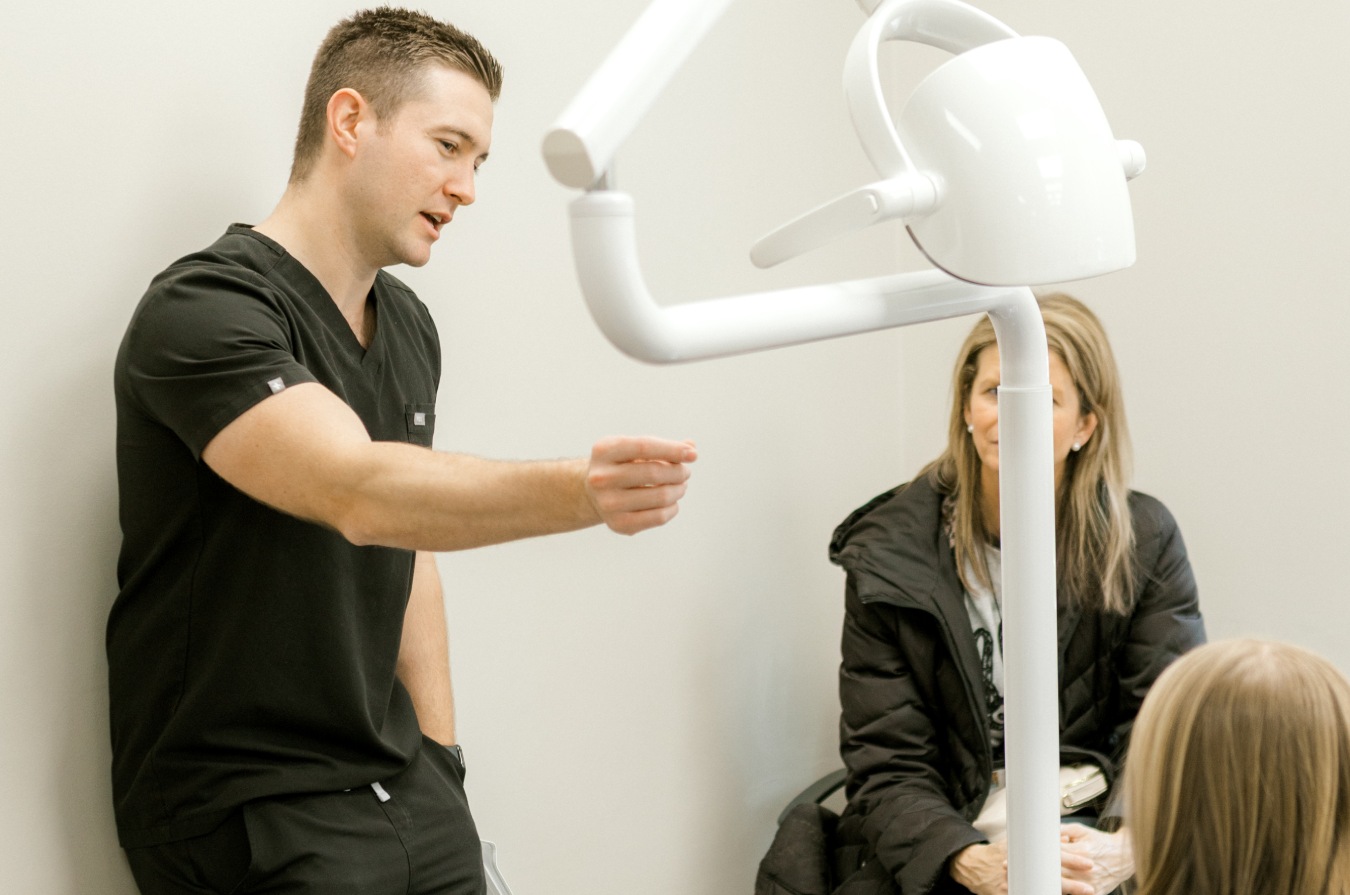
Choosing who straightens your teeth shapes the next year or two of your life, so the decision deserves more than a quick search and a phone call. Consider this our practical answer to what to look for in an orthodontist, written for parents comparing options for a growing child, teens ready for braces, and adults who have been putting this off for years.
At Hometown Orthodontics, families ask us these questions every week, and Dr. Rape and Dr. Teeples answer them the same way every time: honestly, in plain language, with your records on the screen in front of us. Creating beautiful smiles and striving to make a difference in the lives of others on a daily basis is the essence of our practice, which is exactly why we’d rather you ask more questions than fewer. Here’s how we’d answer them if you were sitting across from us.
What Is an Orthodontist, and How Is That Different From a Dentist?
The first thing to look for in an orthodontist is specialty training. An orthodontist is a dentist who completed two to three additional years of accredited residency devoted to tooth movement, bite correction, and jaw growth. General dentists treat oral health broadly; orthodontists focus on alignment, and board certification through the American Board of Orthodontics signals an extra layer of review.
Why Does Specialty Focus Matter More Than a Side Service?
Orthodontic residency covers biomechanics, facial growth and development, and the timing of treatment in children whose jaws are still changing. That training is why an orthodontist looks at more than crooked front teeth. We’re studying how your upper and lower jaws relate, how your teeth come together when you chew, and how your bite will hold up twenty years from now.
Many general dentists offer clear aligners, and some do good work with simple cases. What they don’t have is the residency. When a case involves a deep overbite, an impacted tooth, an underbite, or a child whose growth needs to be guided rather than waited out, that difference shows up in the results.
Why Does Board Certification Matter?
Board certification is voluntary. An orthodontist who pursues it submits treated cases for peer review and passes written and clinical examinations, then renews that certification over time. Our practice is led by a board-certified orthodontist and Diplomate of the American Board of Orthodontics, which is the credential to ask about first.
Dr. Rape has spent more than 35 years in private practice as a board-certified orthodontist and Diplomate of the American Board of Orthodontics. Dr. Jared Teeples, DDS, MS, earned his BS from Brigham Young University-Idaho, his DDS with High Honors from the University of Utah School of Dentistry, and completed his orthodontic residency and MS at the University of Alabama at Birmingham, where he served as Chief Orthodontic Resident and now teaches as a Part-Time Clinical Professor in the UAB Orthodontic Department. Those are the kinds of details any practice you’re considering should be able to hand you without hesitating or changing the subject.
How Is Retention Part of the Specialty?
Straightening teeth is one skill. Keeping them straight is another. Specialty training includes retention planning, which is the part of care most people don’t think about until their retainer cracks. A great orthodontist talks about retainers during your very first visit, not after your braces come off.
What to Look for in an Orthodontist: A Step-by-Step Evaluation Process
Work through these six steps and you’ll have a clear picture of any practice you’re considering.
- Verify credentials, residency, and board certification. Ask directly whether the doctor completed an orthodontic residency and whether they are a Diplomate of the American Board of Orthodontics. You can search the ABO’s public directory and your state dental board’s license lookup. Teaching appointments are another strong signal; our doctors serve as Clinical Professors at the UAB School of Dentistry.
- Review before-and-after photos of real cases. Stock photography is easy to spot once you know the tell: perfect lighting, celebrity-white teeth, no gum tissue visible. Real case photos show retracted lips, actual bite relationships, and different starting points. Ask to see a case that looked like yours.
- Read recent reviews for patterns, not scores. One angry review means little. Ten reviews mentioning long waits, rushed visits, or unreturned calls mean a lot. Look for themes around communication, how the practice handles broken brackets, and whether finished results matched what was promised.
- Book a FREE consultation and compare the reasoning. Two orthodontists may propose different plans for the same mouth, and both can be defensible. What matters is whether the doctor explains why they chose that approach, what the alternatives were, and what happens if your teeth respond differently than expected.
- Look at how the practice actually runs. Ask about scheduling windows, after-hours help for a poking wire, how far in advance visits are booked, and what happens if you’re running late. Convenient hours matter more than you think when you’re coming in every four to eight weeks for a year and a half.
- Confirm who provides hands-on care at each visit. In some practices, an assistant handles most adjustments and the doctor stops by briefly. That model isn’t automatically bad, but you deserve to know. Ask how often the orthodontist personally checks progress and adjusts your appliance.
What Are the Signs of a Great Orthodontist?
The best practices share habits you can spot in a single visit.
- They offer more than one path. If every patient walks out with the same recommendation, that’s a sales script, not a personalized plan. You should hear about metal braces, clear braces, and clear aligners along with the honest trade-offs of each for your case.
- They use digital records for accuracy and comfort. Digital intraoral scanning improves your experience by eliminating the need for “goop and gag” impressions, and digital X-rays mean reduced radiation, clearer images for diagnosis, and less waiting.
- They explain things in plain language. A great orthodontist can describe your bite problem without a wall of terminology, then answer follow-up questions without getting defensive. Second opinions? Welcomed, every time.
- They put the plan in writing. Expect a written personalized plan with the appliance type, estimated timeline, visit frequency, and total cost. Verbal estimates have a way of changing.
- They talk about what happens after. Retainers, wear schedules, replacement costs, and follow-up checks should all come up before you commit.
Small thing, big signal: watch how the front desk treats the family ahead of you. Our prayer is that everyone who walks through our doors leaves feeling like family, and you can usually sense within five minutes whether a practice operates that way.
How Do Your Treatment Options Compare?
Most people arrive with a preference already in mind. Comparing the actual differences helps you hold that preference loosely.
| Option | Visibility | Complexity Handled | Hygiene | Typical Duration |
|---|---|---|---|---|
| Metal braces | Most visible; colored bands available | Handles the widest range, including complex bites | Brushing around brackets takes practice | Commonly 12 to 24 months |
| Clear braces | Much less noticeable than metal | Similar range to metal braces | Same as metal; ties can stain with certain foods | Commonly 12 to 24 months |
| Lingual braces | Hidden behind the teeth | Good for many cases; not ideal for every bite | Brackets are harder to reach on the tongue side | Often similar to or slightly longer than metal |
| Clear aligners | Nearly invisible | Best for mild to moderate cases; some complex cases with attachments | Easiest, since trays come out to brush and floss | Varies with wear time and case complexity |
Clear aligner trays are removable and close to invisible, so plenty of adults and teens appreciate how little they change the look of a smile while treatment is under way. The trade-off is compliance: trays only work while they’re in your mouth, generally 20 to 22 hours a day, and cases involving significant bite correction are sometimes handled more predictably with fixed appliances.
Traditional braces have their own appeal, especially with younger patients. Kids love picking colors at every visit, and that little bit of ownership makes the process feel like theirs. Clear braces land in the middle for many families, since they stay fixed to the teeth like metal, so nothing depends on remembering to put a tray back in after lunch, while blending in far better in photographs.
How Do Specialist Practices, General Dentists, and Mail-Order Aligners Compare?
| Provider Model | Diagnostics | Supervision | Mid-Course Correction |
|---|---|---|---|
| Orthodontic specialist | Full records: digital X-rays, intraoral scans, clinical exam | Regular in-person checks by a residency-trained specialist | Adjustments made as your teeth respond |
| General dentist | Varies by practice | In-person, but without specialty residency training | Limited by scope and case complexity |
| Mail-order aligners | No in-person exam or X-rays in most cases | Remote review only | Little to none; problems surface late |
That third column is the real issue with mail-order aligners. Without X-rays, nobody sees root position, bone levels, or hidden decay before teeth start moving. And when a tooth doesn’t track, there’s no one to catch it at your next visit, because there is no next visit.
What Affects the Cost of Orthodontic Treatment?
Orthodontic cost comes down to three things: how far your teeth and jaws need to move, which appliance you choose, and how many months treatment runs. Mild crowding treated with metal braces sits at the low end. Full bite correction, lingual braces, or clear aligners with added refinements land higher .
A price quoted before anyone has studied your X-rays and scans is really just a guess wearing a number, which is why every honest figure follows a diagnostic record review. Two people with front teeth that look nearly identical can receive very different quotes once records reveal what’s happening below the gumline.
| Cost Factor | How It Affects Your Total |
|---|---|
| Crowding severity | More movement usually means more time in treatment |
| Bite issues (overbite, underbite, crossbite) | May require extra appliances or longer treatment |
| Age and growth stage | Growing patients may need phased or growth-guiding care |
| Appliance choice | Lingual and clear options typically cost more than metal braces |
| Auxiliaries and retainers | Expanders, elastics, and retainers add to the total |
| Treatment length | Longer plans mean more visits and more adjustments |
What Insurance and Payment Options Exist?
Many dental plans include orthodontic benefits, though the amount varies by plan. Ask your carrier three questions: Is there an orthodontic lifetime maximum? Does it cover adults or children only? Is there a waiting period? Many families also use FSA or HSA dollars, and most practices offer monthly payment arrangements. Ask us what we can set up for your budget.
What Are the Red Flags on a Quote?
- A price given before anyone reviewed diagnostic records
- No written breakdown of what’s included
- Vague answers about retainers, replacements, or post-treatment visits
- Pressure to sign the same day for a “special” rate
Ask this exact question before you commit: “What does this quote not cover?” The answer tells you a lot.
Who Should See an Orthodontist, and When?
Children should have a first orthodontic evaluation by age 7, according to the American Association of Orthodontists. Adults are candidates as well, at any age, as long as teeth and gums are healthy. Early evaluation does not always mean early treatment; in plenty of cases it simply means monitoring growth for a few years.
By that age, enough permanent teeth have come in for our orthodontists to spot crowding, crossbites, or jaw growth concerns while the jaws are still developing, which keeps more options open than waiting does.
What Signs Mean You Should Bring a Child In?
- Crowded, overlapping, or noticeably crooked teeth
- A crossbite, where upper and lower teeth don’t line up properly
- Baby teeth lost much earlier or later than siblings and classmates
- Thumb sucking or tongue thrusting past the toddler years
- Difficulty chewing, mouth breathing, or a jaw that shifts when closing
At age 7, your child has a mix of baby and adult teeth, jaw growth patterns are becoming clear, and subtle concerns can be caught before they become bigger ones.
Why Are More Adults in Treatment Than You Might Expect?
According to the AAO, roughly one in four orthodontic patients today is an adult. Some are fixing shifting they’ve watched happen for a decade. Others had braces as teens and stopped wearing a retainer. Braces are about much more than straight teeth: orthodontic treatment helps improve bite function, protects long-term oral health, and most importantly results in increased confidence.
What Makes Someone a Good Candidate?
Healthy teeth and gums come first. Active cavities or gum disease get treated before appliances go on, usually with your general dentist. For clear aligners specifically, candidacy depends on case complexity and your willingness to wear the trays consistently every single day.
Frequently Asked Questions About Choosing an Orthodontist
How do I verify an orthodontist’s credentials and board certification?
Start with the American Board of Orthodontics website, which lists Diplomates by name and location. Your state dental board’s online license lookup confirms an active license and specialty designation. You can also simply ask at your visit; a residency-trained orthodontist will tell you where they trained and what year they finished.
Should I get a free consultation or a second opinion?
Both, if you want. A FREE consultation costs you nothing but time, and comparing two plans side by side is one of the smartest things you can do. Reputable orthodontists are comfortable with second opinions, and any practice that discourages one has told you something important.
What questions should I ask at my first orthodontic visit?
Ask what’s actually wrong with your bite, what options could correct it, how long each would take, and what the total cost includes. Then ask two more: who will see you at each visit, and what the retainer plan looks like after treatment ends. Take notes so you can compare practices later.
Does it matter if the orthodontist is an Invisalign provider?
It matters if clear aligners are part of your personalized plan, since certified Invisalign providers have completed the training to prescribe and manage that system. It shouldn’t be your only filter, though. Specialty residency and board certification tell you more about diagnostic skill than any single brand credential.
How long does orthodontic treatment usually take?
Most full treatments run somewhere between 12 and 24 months, with visits every four to eight weeks. Simple alignment cases finish faster. Cases involving jaw relationships, impacted teeth, or growth guidance take longer, and your orthodontist should give you a realistic estimated range in writing rather than a single confident number.
What happens if I move or need to switch orthodontists mid-treatment?
Transfers happen more often than people expect, and orthodontists handle them routinely. Your records, scans, and X-rays transfer to the new practice, which then quotes the remaining portion of care. Ask about the refund or transfer policy before you start, because policies differ and it’s much easier to ask now than later. If you have the checklist above in hand, that conversation, like every other one you’ll have while choosing a practice, gets considerably easier.